

Corporate security does not look the way it did ten years ago.
What was once primarily focused on monitoring entrances and managing visitor access has evolved into a complex operational discipline responsible for protecting people, property, data, and brand reputation across increasingly large and sophisticated environments. Today’s corporate security teams oversee multi-building campuses, manufacturing plants, distribution hubs, healthcare facilities, and high-rise offices that may span multiple cities or states. The scope has expanded. The risks have grown. Expectations are higher, and at the center of it all is communication.
In high-pressure environments where seconds influence outcomes, communication is not a convenience. It is infrastructure. It is the system that connects response teams, coordinates action, and enables real-time decision making. When communication falters, coordination suffers. When coordination suffers, risk increases.
More organizations are recognizing that communication systems are not equipment purchases. They are long-term strategic investments that directly impact safety, accountability, and operational continuity.
The Reality of Modern Corporate Environments: Corporate campuses today are engineering achievements. Steel, concrete, glass, underground parking structures, stairwells, elevator shafts, and expansive footprints define modern facilities. These environments are impressive from an architectural standpoint, but they introduce serious communication challenges.
Radio frequency signals behave differently around reinforced concrete and dense structural materials. Underground garages can block cellular coverage entirely. Stairwells often create dead zones. High levels of electronic equipment generate interference. Add to that the need to coordinate across multiple buildings or even multiple cities, and communication complexity increases significantly.
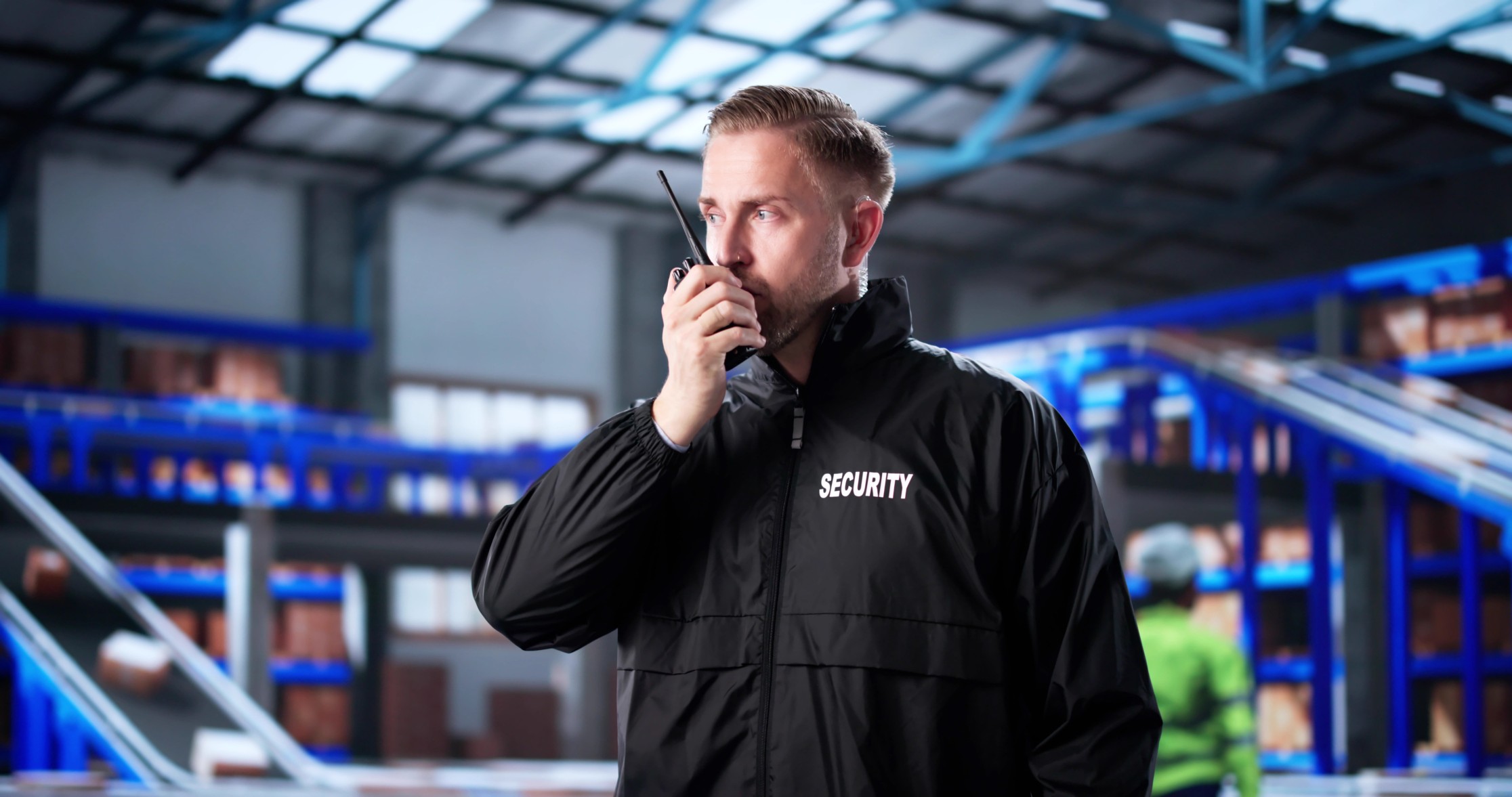
Security teams operate within this environment every day. They respond to medical incidents, suspicious activity, facility alarms, employee safety concerns, and emergency situations that require immediate coordination. They must communicate instantly with fellow officers, supervisors, facilities teams, and sometimes local law enforcement.
Cell phones were never designed for this level of operational reliability. They rely on public carrier networks. Indoor coverage is inconsistent. Networks can become congested during emergencies. Calls require dialing and waiting for connections. Group communication requires conference calls or messaging threads that slow down response time. For mission-critical coordination, those delays matter.
Professional digital two-way radio systems address these challenges directly. With push-to-talk functionality, communication is immediate. One button connects an entire team. Conversations are clear, direct, and controlled. Encryption protects sensitive communications. Coverage can be engineered specifically for the facility environment. The difference between consumer communication tools and engineered radio systems becomes very clear when response speed and accountability are measured.
Technology Designed for Mission Critical Performance

When organizations evaluate communication systems for corporate security, the discussion quickly turns to reliability and performance. In that conversation, Motorola Solutions consistently stands out.
For nearly a century, Motorola Solutions has supported public safety agencies, government entities, utilities, and enterprise operations around the world. The same engineering discipline that supports first responders is applied to enterprise-grade radio systems.
Audio clarity is exceptional, even in high-noise areas. Advanced noise suppression reduces background interference. Digital encryption protects communication channels. Emergency alert functionality allows officers to trigger priority notifications instantly. Hardware durability ensures devices withstand drops, weather exposure, and long shifts.
For corporate security leaders, this level of performance translates into operational confidence. When an officer presses the push-to-talk button, the expectation is an immediate response. When sensitive information is shared, the expectation is security. When an emergency alert is activated, the expectation is system wide visibility. These are not optional features. They are operational requirements.
The benefit of aligning with a technology partner such as Motorola Solutions is not only product quality. It is long term innovation stability. Organizations invest in platforms that will continue to evolve, integrate, and scale over time.
Engineering Matters More Than Equipment
While product selection is critical, technology alone does not determine performance. System design, coverage mapping, installation quality, and ongoing service support are equally important.
While product selection is critical, technology alone does not determine performance. System design, coverage mapping, installation quality, and ongoing service support are equally important.
RFC Wireless, as part of CSE Crosscom U.S.A., brings a level of engineering depth that extends far beyond hardware distribution. Being part of a national organization provides access to standardized deployment practices, technical specialists across multiple industries, and experience managing large scale projects.
For corporate security directors overseeing multiple facilities, this national capability matters. It ensures consistency in system design across locations. It allows organizations to replicate best practices when expanding into new regions. It provides confidence that service support will remain stable and available as operations grow.
CSE Crosscom also operates globally, which introduces additional value. Enterprise clients benefit from insight into international best practices in industrial and security communications. Lessons learned in one sector or region can inform stronger deployments elsewhere. This structure transforms the relationship from vendor to strategic partner.
Communication systems are no longer isolated purchases. They are integrated into broader safety strategies, facilities planning, and risk management frameworks. Having engineering resources that understand those intersections strengthens outcomes.
Growth, Renovation, and the Need for Flexibility
Corporate environments rarely remain static. Facilities expand. Renovations occur. Departments relocate. Construction projects introduce temporary operational complexity. During these transitions, communication continuity remains critical.
Temporary radio rental solutions provide flexibility when permanent systems are being upgraded or expanded. Construction teams require coordination with facilities managers. Security teams must maintain coverage during phased deployments. Large scale corporate events can temporarily increase personnel needs.
Because RFC Wireless is supported by the broader inventory and logistical capabilities of CSE Crosscom U.S.A., rental fleets can scale quickly to meet enterprise requirements. This flexibility ensures that operational performance does not decline during transitional periods. Flexibility is not simply a convenience. It is a component of risk management.
Communication as a Measurable Performance Driver
Corporate security leadership is increasingly evaluated using measurable metrics. Response times are tracked. Incident mitigation performance is reviewed. Risk exposure is assessed. Operational accountability is documented. Modern digital radio systems contribute directly to these performance indicators.
GPS tracking enables visibility into personnel location when appropriate. Department specific talk groups organize communication channels to reduce clutter. Dispatch integration centralizes coordination. Emergency alert functions prioritize urgent situations.
When communication is structured, reliable, and immediate, response efficiency improves. When response efficiency improves, documentation improves. When documentation improves, executive leadership gains clearer insight into operational performance.
Communication becomes a driver of measurable results.
Scale, Stability, and Long-Term Strategy
Selecting a communication partner requires evaluating more than feature lists. Organizations must consider long term service capability, financial stability, engineering depth, and access to future technology developments.
As part of CSE Crosscom U.S.A., RFC Wireless combines regional responsiveness with national infrastructure. Clients benefit from local relationships and hands on support while also gaining the backing of a larger organization with established resources.
For multi-site enterprises, this combination reduces risk. It supports standardization across facilities. It ensures continuity as organizations expand into new markets.
Communication gaps create vulnerability. Stability reduces it.
Corporate security teams carry significant responsibility. They protect employees, visitors, intellectual property, and corporate reputation. Their ability to perform effectively depends on systems that work every time they are needed.
Professional-grade digital radio systems supported by experienced engineering teams provide that reliability. When aligned with trusted technology partners and backed by national infrastructure, communication becomes a strength rather than a vulnerability.
Protecting what matters most requires more than policies and procedures. It requires communication systems engineered to perform under pressure, scale with growth, and support long-term operational strategy.
In corporate security, clarity is power. Reliability is protection. And communication is the foundation that connects it all.
Want to see how modern radio systems can improve your security operations? Contact RFC Wireless to schedule a meeting, request a quote, or discuss a customized communication solution for your facility.