

Why Communication Has Become a Competitive Advantage for Modern Fleet Operations
There was a time when transportation was largely about planning routes, dispatching drivers, and delivering goods or passengers on schedule. While those fundamentals have not changed, nearly everything around them has.
Today’s transportation organizations operate in an environment where customer expectations are higher, labor is harder to find, regulations continue to evolve, and disruptions have become part of everyday business. A single accident, equipment issue, road closure, weather event, or last-minute schedule change can ripple across an entire operation in a matter of minutes.
For fleet managers, operations directors, and dispatch teams, the challenge is no longer simply moving vehicles from one place to another. It is making hundreds of decisions throughout the day using information that is constantly changing.
That is one reason communication has become such an important operational asset

When people hear the phrase “fleet communications,” they often think about radios or dispatch systems. In reality, communication influences nearly every part of a transportation operation. It determines how quickly drivers receive updated instructions, how efficiently maintenance teams respond to equipment issues, how dispatch reallocates resources when conditions change, and how confidently managers make decisions as operations unfold.
The organizations that consistently perform well are rarely successful because they have the largest fleets or the newest vehicles. More often, they have a clearer operational picture. They know where resources are located, understand what is happening in the field, and can quickly connect the right people when something unexpected occurs.
That level of visibility does not eliminate challenges. It allows organizations to respond before small issues become larger operational problems.
When Information Becomes the Bottleneck
Traffic is often blamed when transportation schedules fall behind. In reality, many delays begin long before a vehicle encounters congestion.
A driver arrives at a customer location but cannot reach dispatch immediately. A maintenance issue is not reported until the end of the shift. A route changes because of construction, but the update does not reach everyone who needs it. A dispatcher spends valuable time contacting employees individually rather than communicating with an entire team at once.
Individually, these moments may only cost a few minutes. Across hundreds of vehicles, routes, and service calls, they can become measurable operational costs.
Lost time affects more than schedules. It can increase fuel consumption, create unnecessary overtime, reduce vehicle utilization, disrupt customer commitments, and place added pressure on employees who are already managing demanding workloads.
After working with transportation organizations throughout California, we have found that communication challenges rarely stem from a complete lack of technology. Most organizations already use a combination of mobile phones, radios, GPS systems, dispatch platforms, telematics, and fleet management software.
The challenge is that those tools often operate independently.
Drivers may receive calls on one device, route information through another application, and maintenance instructions through a separate process. Dispatch teams may have access to vehicle locations but limited insight into what is happening in the field. Supervisors may spend valuable time gathering information from multiple sources before they can make a decision.
Teams are communicating, but they are not always connected.

Five Signs Your Fleet Communication Strategy May Be Holding You Back
As transportation operations become more complex, communication problems often show up in small but consistent ways. These warning signs can indicate that the systems supporting the fleet have not kept pace with the organization.
- Drivers rely on several different communication methods throughout the day. When employees move between phone calls, text messages, applications, and radios, valuable information can become delayed, duplicated, or missed entirely.
- Dispatch lacks a complete view of field activity. Knowing where a vehicle is located is valuable, but location alone does not explain what is happening, what support is needed, or how quickly conditions are changing.
- Maintenance issues are reported too late. Small mechanical concerns can escalate into costly repairs or service interruptions when drivers and maintenance teams do not have a simple way to share information immediately.
- Teams lose time tracking down the right person. Communication should help employees solve problems quickly. If dispatchers, drivers, or supervisors spend significant time trying to determine who is available, the system may be creating more work than it removes.
- The communication system has not evolved as the fleet has grown. A solution that worked well for a small regional operation may no longer support a larger service area, additional drivers, new facilities, or more complex customer requirements.
These issues are easy to accept as part of the daily routine, especially when teams have found workarounds. Over time, however, workarounds become processes, and inefficient processes can become difficult to see.

Transportation Has Become a Real-Time Business
Not long ago, many transportation operations were built around relatively predictable schedules. Routes were planned in advance, dispatchers communicated with drivers periodically, and customers accepted broader delivery or service windows. That model has changed.
Customers now expect faster service and more frequent updates. Drivers face changing traffic patterns, road construction, weather disruptions, and unexpected service requests. Dispatchers are expected to respond within minutes, not hours, while operations leaders need visibility into activity as it happens, not after the workday ends.
This shift has transformed transportation into a real-time business where information must move as efficiently as vehicles.
Organizations that can quickly communicate route changes, coordinate field personnel, and respond to developing issues are better positioned to control costs, protect service levels, and maintain customer confidence.
This is especially important in California, where transportation organizations may be managing dense urban traffic, expansive service territories, port activity, major construction projects, public transit routes, or fleets that move between metropolitan and remote areas during the same shift.
Reliable communication must support the operation wherever the work takes place.
Looking Beyond Voice Communications
For many organizations, the conversation begins with replacing aging radios, improving coverage, or finding a more reliable way for drivers and dispatchers to communicate.
Increasingly, the conversation becomes much broader.
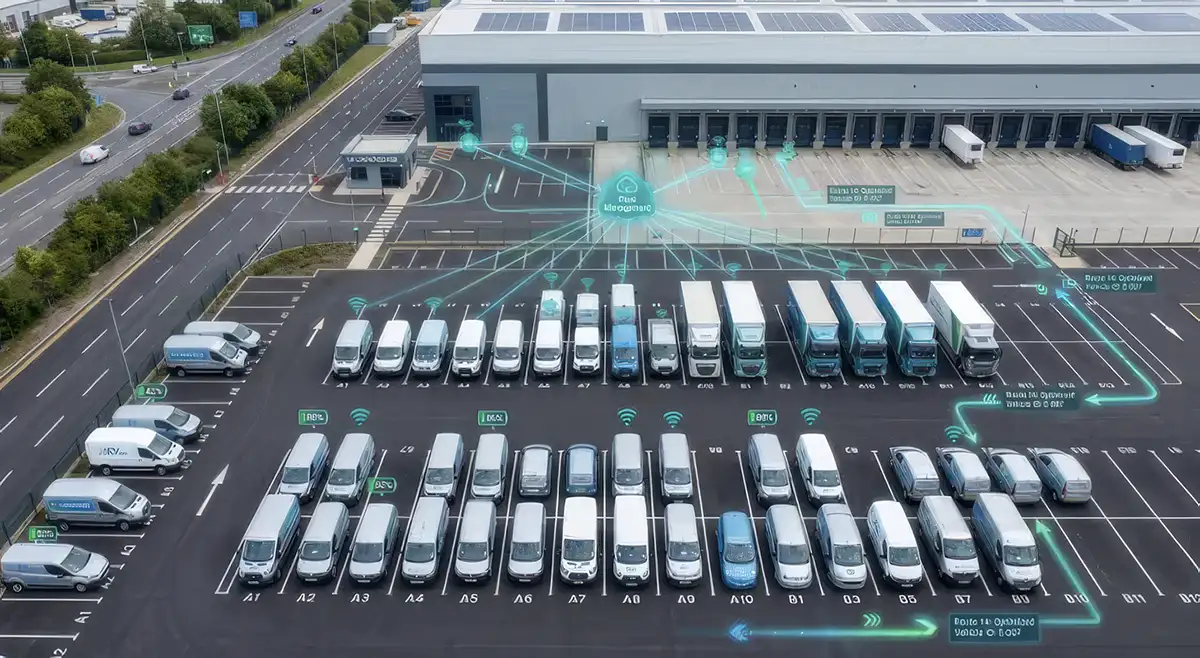
Modern fleet communication strategies may combine voice communication with broadband push-to-talk, GPS location services, dispatch software, mobile applications, operational reporting, and vehicle telematics. When these tools work together, organizations gain more than faster conversations. They gain a better understanding of what is happening across the entire fleet.
That visibility can help dispatchers allocate resources more effectively, support drivers during changing conditions, identify patterns that contribute to delays, and provide maintenance teams with earlier notice of potential vehicle issues.
The objective is not to add technology for the sake of adding technology. It is to simplify the way information moves through the organization.
A well-designed communication strategy should reduce the number of steps required to solve a problem. It should help drivers stay focused on the road, give dispatchers faster access to field information, and allow supervisors to make decisions without searching across multiple disconnected systems. Technology should support the workflow, not complicate it.
The Future of Fleet Operations Will Be More Connected
Transportation will continue to become more connected over the next decade
Electric vehicles, predictive maintenance, artificial intelligence, smarter routing systems, and advanced fleet analytics are already changing how organizations manage vehicles and employees. These technologies offer significant opportunities, but they also create more information that teams must understand and act upon.
The value of connected fleet technology will depend on how effectively that information reaches the people responsible for making decisions.
A routing platform may identify a faster path, but the driver still needs to receive the update clearly. A telematics system may detect a mechanical concern, but maintenance teams still need to understand its urgency. A dispatcher may see a developing service issue, but supervisors and drivers need to coordinate the response.
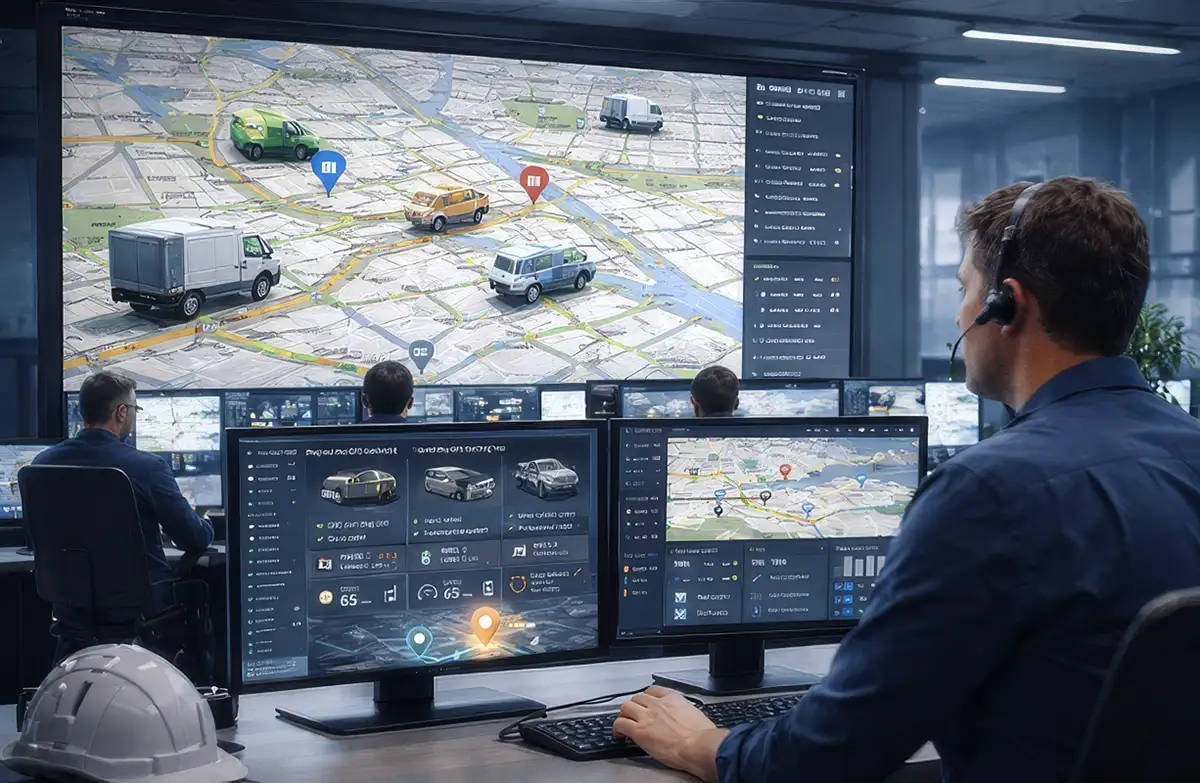
Despite continued advances in automation, transportation will remain a people-driven business.
Drivers, dispatchers, maintenance professionals, supervisors, and operations leaders will continue making the decisions that keep fleets safe, efficient, and responsive. Communication is what connects those decisions.
The RFC Perspective
For more than four decades, RFC Wireless has worked alongside transportation organizations across California to design communication solutions that support safer and more efficient fleet operations.
One lesson continues to stand out. Transportation challenges rarely begin with a single device or piece of equipment. More often, they develop when operations grow faster than the communication systems supporting them.
A fleet expands. Service areas become larger. New technology is added. Customer expectations increase. Over time, a communication strategy that once worked well can become fragmented even if no intentionally designed it that way.
The strongest transportation organizations periodically step back and examine how information moves through the business. They look at where delays occur, where teams rely on workarounds, and where employees spend unnecessary time trying to connect with one another.
Those conversations often reveal that meaningful improvements do not always require a complete replacement of existing systems. In many cases, the greatest opportunity comes from connecting technologies more effectively, improving coverage, simplifying workflows, or creating a communication strategy that better reflects how the organization operates today.
Every transportation organization is different. Fleet size, service areas, staffing models, vehicle types, and operational priorities all influence how communication should be designed.
Whether you are expanding your fleet, evaluating aging communication systems, improving dispatch visibility, or looking for ways to reduce delays across daily operations, the best place to start is with a conversation.
For more than 40 years, RFC Wireless has helped transportation organizations across California design integrated communication strategies that improve coordination, strengthen safety, and support more efficient fleet operations.